Move with children tips for smoother family removals
Moving house is busy enough on its own. Add children into the mix, and suddenly every box, routine, and bedtime can feel a bit more fragile. If you are looking for Move with children tips for smoother family removals, you are probably after more than generic advice. You want a move that keeps the children calm, protects family routines, and avoids that familiar moving-day chaos where nobody can find the kettle and someone is crying over a missing toy rabbit.
Truth be told, family removals can be smoother than people expect, but only when the move is planned around the children rather than squeezed in around them. The good news is that there are simple, practical ways to make the process feel safer, more predictable, and less overwhelming for everyone. This guide walks through what matters, how it works in real life, and what you can do before, during, and after the move to keep the whole family on steadier ground.
By the end, you will have a clear plan you can actually use. Not a perfect one. Just a better one.
Why Move with children tips for smoother family removals Matters
Children do not experience a move the same way adults do. They are not just changing postcodes. They are losing familiar rooms, routines, neighbours, school routes, bedtime sounds, and the small things that make a place feel safe. That is why moving house can trigger worry, clinginess, sleep disruption, or behaviour that seems out of character. Sometimes the first sign is simple: a child goes quiet, or becomes unusually bossy about where a favourite blanket must stay. Small things, but they matter.
A smoother family move is not about avoiding every wobble. That is unrealistic. It is about reducing uncertainty. Children cope better when they understand what is happening, know what will stay the same, and can see that adults are in control. Even a basic routine around meals, school pick-ups, and bedtime can give the move a calmer shape.
For parents, the stakes are practical too. A child who is anxious can make packing harder, sleep worse, and turn the final days into a scramble. If you have ever tried to label boxes while answering "where is my teddy?" for the sixth time, you will know the feeling. A family-focused move protects your time, energy, and patience. That is not a small thing.
There is also a safety angle. Busy moving days involve open doors, stacked boxes, heavy furniture, and unfamiliar movers coming and going. When children are part of the picture, clear planning helps lower the risk of accidents and makes supervision easier. So yes, this topic matters for emotional reasons, but also for very practical ones.
How Move with children tips for smoother family removals Works
The basic idea is straightforward: plan the move in phases that suit the children's age, temperament, and routine. In practice, that means starting earlier than you think, communicating simply, and organising the day around predictability rather than last-minute heroics.
A child-friendly moving plan usually works in four layers:
- Preparation: talk about the move early, answer questions honestly, and start decluttering and packing gradually.
- Routine protection: keep meals, sleep, and school or nursery patterns as stable as possible.
- Emotional reassurance: give children small choices and familiar items so they feel some control.
- Moving-day management: arrange childcare, pack essentials separately, and keep a calm, simple plan for the first night.
That sounds neat on paper. Real life can be a little messier. A child may love the idea of a new bedroom one minute and cry about leaving the garden the next. That is normal. The trick is not to over-explain or over-promise. Keep the message steady: we are moving, we are ready, and we will keep the important parts of family life in place.
It helps to think of the move as a sequence rather than a single day. Family removals become easier when you treat the weeks before moving day as part of the move itself. If boxes appear slowly, children adapt slowly. If the whole house turns into a warehouse overnight, everyone feels it.
Key Benefits and Practical Advantages
There are some very real advantages to planning a move with children in mind. The biggest one is reduced stress, but that is only the headline. The smaller gains are often what make the difference.
- More settled children: when they know what is happening, children usually feel less anxious and less reactive.
- Less disruption to routines: a clear plan around school runs, bedtime, and meals helps life feel normal faster.
- Smoother packing: parents can pack in stages without constant interruption if children are involved thoughtfully.
- Safer moving day: fewer surprises means fewer hazards, especially around heavy lifting and open doors.
- Better first-night experience: the essentials are ready, so you are not hunting for pyjamas or a phone charger at 9:30 p.m.
There is also a quieter benefit that people sometimes overlook: children often remember how a move felt. Not every detail, of course, but the tone. Was it tense and chaotic, or steady and warm? That memory can shape how they adapt to the new home. A move that feels managed, even if imperfectly, gives them a better emotional start.
And for parents, there is a relief in not having to improvise every five minutes. Let's face it, moving already asks a lot. If you can reduce just one layer of pressure, the whole day feels more manageable.
Who This Is For and When It Makes Sense
This approach is useful for almost any family move, but it is especially valuable if you have younger children, children with additional needs, or a move that involves a big disruption such as a school change. It also matters if you are moving long distance, moving on a tight timeline, or dealing with a busy home where packing is taking place alongside work and daily childcare.
Families often benefit most when:
- children are under primary school age and need extra reassurance;
- a new school or nursery is part of the change;
- the move involves downsizing and some favourite belongings cannot come straight away;
- you are moving in winter, when darker evenings and bad weather can add stress;
- there are babies or toddlers whose routines are sensitive to noise, sleep disruption, and overstimulation;
- the move is happening around exam periods, school transitions, or medical appointments.
If your household is already stretched, a family-focused plan is even more useful. It does not need to be elaborate. In fact, simplicity usually works better. A few clear routines and some thoughtful packing choices can do more than a long checklist full of aspirational nonsense.
For larger family moves, it can also make sense to look at a professional service that handles the heavy lifting while you focus on the children. If you are comparing support options, a general overview of removal services can help you understand what is available before you decide how much help you need.
Step-by-Step Guidance
A calmer family move is mostly about sequence. The order matters. Here is a practical way to approach it.
1. Tell children early, but keep it simple
Once the move is real, tell them in age-appropriate language. Avoid flooding them with details all at once. Younger children usually need simple explanations, while older children may want more practical information about school, bedrooms, or where their things will go. The aim is to be honest without creating anxiety.
If a child asks, "Do I have to leave my room?" the answer should be clear and reassuring. "Yes, we are moving, but you will still have your own space." Keep it plain. No long speeches.
2. Build a predictable routine around the move
Try to keep wake-up times, mealtimes, bath time, and bedtime as close to normal as possible. You do not need perfection. A slightly later dinner one night is fine. But if every routine disappears for two weeks, children can feel untethered. Familiarity is the anchor.
3. Declutter in stages
Do not leave every decision for the final weekend. Children may want to "help" by emptying one box and filling another with soft toys. That is fine, but the bigger win is staged decluttering. Start with spare cupboards, seasonal items, and things children do not use daily. If you need a practical starting point, this guide on decluttering before changing homes can give you a structured way to reduce the pile without turning the whole house upside down.
4. Pack a child essentials bag
This is one of the most useful steps of all. Put together a bag or small case with everything needed for the first 24 hours: snacks, water bottles, wipes, nappies if needed, spare clothes, pyjamas, bedtime comfort items, basic medicine if appropriate, chargers, and a few quiet toys or books. If you only do one thing from this article, do this. Honestly, it saves nerves.
5. Keep the children involved in small ways
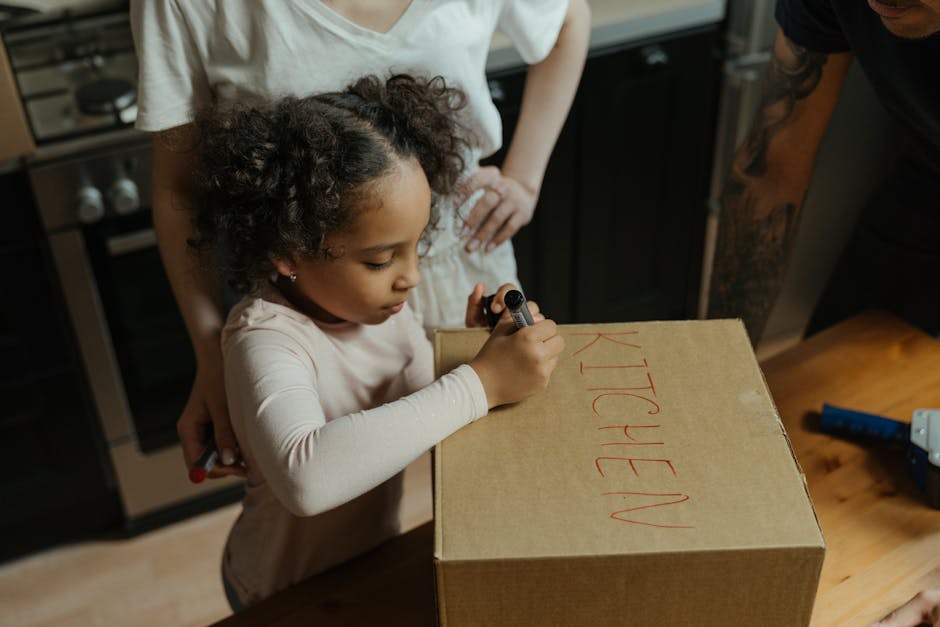
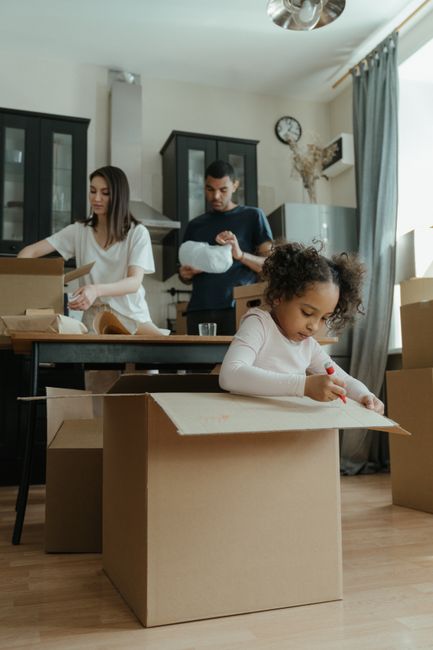
Give them age-appropriate jobs. A toddler can carry soft toys to a box. A primary school child can label a box with stickers. An older child can help sort books or choose which items go into their overnight bag. Small tasks help children feel included instead of displaced.
6. Plan for moving day itself
If possible, arrange for a trusted family member, friend, or carer to look after younger children during the busiest hours. If that is not possible, set up one safe room or a quiet area with snacks, games, and familiar things. Keep boxes away from that space. Moving day has enough noise without kids stepping over tape rolls and wardrobe panels.
7. Prepare the new home before the children arrive
Try to set up bedrooms first if you can. A made bed, a favourite lamp, or a familiar toy on the pillow can make the new place feel less strange. One family often finds that the kitchen and sleeping areas matter most in the first 24 hours. The rest can wait. No one needs to build the perfect home office before the children have found their toothbrushes.
8. Re-establish routine quickly
After the move, do the usual things early: breakfast, school run, bath, stories, lights out. Familiar actions tell children, in a very real way, that life is still life. You are in a new house, yes, but the family rhythm is still there.
Expert Tips for Better Results
The practical basics matter, but a few expert habits can make the whole process smoother. These are the things that tend to get forgotten when people are rushed.
Use language that reduces uncertainty. Instead of saying "everything is changing," say "our home is changing, but our routines and family are staying together." That small shift matters. Children latch onto wording more than adults realise.
Pack sentimental items separately. A favourite blanket, a photo, a bedtime book, or a tiny toy can be emotional lifelines. Keep them easy to reach. You do not want to be rummaging through a box labelled "miscellaneous living room bits" at bedtime.
Match support to age. Toddlers often need presence and repetition. Primary-aged children usually want practical answers and a sense of involvement. Teenagers may seem uninterested, but they often care deeply about privacy, Wi-Fi, and whether the new area feels socially manageable. Different age groups, different pressures.
Protect sleep more than you protect packing speed. If you have to choose between packing one more box and getting everyone to bed on time, choose sleep. A tired child can turn a manageable move into a wobbly one very quickly.
Label boxes in a family-friendly way. Labels like "children's books - bedroom" or "first night kitchen" are more useful than vague room names alone. It speeds up unpacking and reduces that awful "where did we put the mugs?" moment.
Leave room for emotion. Some children will be fine until the last morning, then suddenly melt down because the wall stickers are being removed. That does happen. Let it happen without rushing to fix everything. Acknowledge the feeling, then move on with the next small task.
If you are using professional movers, it is worth choosing a company that treats household items carefully and understands family timing. For extra peace of mind around handling and transport, reading about insurance and safety can help you understand the kind of protection and care you should expect.
Common Mistakes to Avoid
Most moving stress with children comes from a handful of avoidable mistakes. They are common, not because parents are careless, but because moving is hectic and the obvious things get missed.
- Leaving the conversation too late: children need time to absorb the idea of moving.
- Overloading them with details: too much information can be more unsettling than not enough.
- Packing familiar items too early: if all comforts disappear a week before the move, the house can feel unsettling.
- Assuming children do not notice stress: they absolutely do, even when nobody says anything.
- Forgetting food and sleep plans: tired, hungry children are harder to comfort and manage.
- Leaving essentials in random boxes: the first night becomes much harder than it needs to be.
- Trying to do everything on moving day: that usually leads to stress and crossed wires.
One of the biggest mistakes, to be fair, is expecting children to adapt instantly because adults have already accepted the move. They are not processing it the same way. Their world is more immediate. The old bedroom, the old route to school, the old view from the window. Those things can carry a lot of weight.
A second mistake is making the move feel like a loss-only event. If there is a new park nearby, a bigger room, a shorter school walk, or a chance to decorate a bedroom differently, talk about those things too. Not as a sales pitch. Just as part of the picture.
Tools, Resources and Recommendations
You do not need fancy systems to manage a family move, but a few tools make life easier.
- Colour-coded stickers or tape: useful for matching boxes to rooms quickly.
- Simple checklist app or paper list: choose whichever you actually look at.
- Clear storage tubs for essentials: especially handy for toiletries, bedtime items, and school supplies.
- Child-friendly timers or visual schedules: helpful for younger children who need to understand what comes next.
- Laundry bags for soft items: quick, easy, and far better than hunting for missing socks later.
If you want to make the move less physically demanding, professional packing support can be worth considering. A service such as packing and unpacking services can reduce the pressure on parents who are already juggling school runs, work, and family admin. Similarly, if you are comparing moving support more broadly, browsing home moves can help you understand the kind of help that fits a household move rather than a one-size-fits-all approach.
For families with larger furniture or a mix of items that need careful handling, the right vehicle also matters. A suitable removal van or larger moving setup can make loading safer and reduce the number of trips. It is a small detail until suddenly it is not.
Law, Compliance, Standards and Best Practice
Family removals are not usually about complex legal issues, but there are still sensible standards and expectations worth keeping in mind. If you use a removal company, you want to know that they work safely, handle goods responsibly, and communicate clearly about what is included.
In the UK, good practice generally means clear pricing information, sensible handling procedures, and appropriate care for property and belongings. You should also expect basic safety thinking around lifting, access, parking, and protecting floors or doors where needed. If children are present on moving day, the practical safety side matters even more. Open vehicle doors, stacked furniture, and unsecured boxes are not ideal near little feet.
It is also wise to check terms around timing, payment, and what happens if plans change. Family moves can shift slightly because of school schedules, traffic, weather, or childcare issues. A provider's terms and conditions should be clear enough to understand before the day arrives. That kind of clarity is boring, yes, but very useful.
Where sustainability matters to you, ask whether unpacking waste, unwanted items, or packaging can be managed responsibly. A service with a sensible approach to recycling and reuse can reduce clutter at the end of a move. If you are interested in that side of the process, you can review recycling and sustainability to see how a more responsible move can fit into your plan.
And if you are comparing providers, do not just look at the headline price. Look at what the service includes, how safety is handled, and whether the company seems to understand family priorities. That is the real test.
Options, Methods, and Comparison Table
There is no single best way to move with children. The right method depends on budget, time, distance, and how much support you want on the day. Here is a simple comparison to help you think it through.
| Approach | Best for | Pros | Trade-offs |
|---|---|---|---|
| Self-managed move | Small households, tight budgets, flexible schedules | More control, lower upfront cost, easier to work around school hours | More work for parents, more stress on moving day, higher chance of last-minute chaos |
| Man and van style support | Smaller to medium family moves, short local moves, flexible loading | Practical, often faster for lighter moves, easier for staged loads | May be less suitable for larger homes or lots of furniture |
| Full removal service | Busy families, larger homes, longer distance moves | Less heavy lifting for parents, more structured day, often less disruption | Usually higher cost, requires more booking coordination |
| Packing add-on | Families with limited time or lots of fragile items | Reduces parent workload, speeds up prep, improves box organisation | Extra cost, still needs decisions from the family |
For many families, a mixed approach is the sweet spot: pack the personal and child-related items yourself, then use professional help for furniture, bulky items, and transport. That way you keep emotional control where it matters and outsource the hardest physical part. Sensible, really.
Case Study or Real-World Example
Here is a realistic example based on a common family moving pattern. A couple with two children, one in primary school and one in nursery, were moving from a flat into a house across town. They had a tight completion day and only one weekend to settle in.
Instead of packing everything in one go, they started three weeks earlier. The parents labelled one box a day after bedtime, which sounds almost laughably slow, but it worked. They packed winter clothes, books, spare bedding, and kitchen extras first. The children were asked to choose one "move bag" each with a favourite toy, pyjamas, a small snack, and a photo.
On moving day, the children spent a few hours with grandparents. Nothing fancy. Just a quieter environment while the van was loaded. By evening, their beds were made first, the kettle was unpacked, and the children's bag was already in the hallway. When the youngest asked where his train set was, it was in the first labelled box, not buried under a pile of random living room items. Small victory. Big mood shift.
What made the difference was not perfection. It was planning around the children's needs instead of treating them as part of the furniture. The move still had noise, cardboard, dust, and that odd smell of fresh paint and tape. But it felt manageable.
Practical Checklist
Use this as a simple pre-move and moving-day checklist. Keep it somewhere visible, because honestly, once the boxes multiply, memory goes a bit fuzzy.
- Tell the children about the move in clear, age-appropriate language.
- Keep routines steady where you can.
- Pack a separate essentials bag for each child or each age group.
- Label boxes clearly by room and priority.
- Set aside comfort items, bedtime items, and school essentials.
- Arrange childcare or quiet supervision for moving day if possible.
- Prepare one safe room or calm zone in the current home.
- Make the children's bedrooms a priority in the new home.
- Keep snacks and water easy to reach.
- Plan simple meals for the first day and night.
- Check access, parking, and moving times in advance.
- Keep passports, documents, medication, and keys with an adult, not in a box.
- Expect emotions and leave room for them.
- Re-establish bedtime quickly after the move.
Expert summary: the smoother the move feels for the children, the easier it usually feels for the adults too. Calm routines, clear boxes, and one well-packed essentials bag can make a bigger difference than most people expect. A move does not need to be flawless to be successful. It just needs to feel safe enough, organised enough, and kind enough to live through.
Conclusion
Moving with children is rarely effortless, but it does not have to be chaotic. When you plan ahead, protect routines, involve children in small ways, and keep the first day organised, family removals become much more manageable. The real goal is not a perfect moving day. It is a move that lets everyone settle without too much stress or uncertainty hanging in the air.
Keep things simple. Keep things clear. And remember that children do best when adults project steadiness, even if the boxes are piled a little higher than expected.
Get a free quote today and see how much you can save.
With a sensible plan and a bit of patience, your family can get through moving day and come out the other side with a calmer start in the new home. One box at a time, really.
Frequently Asked Questions
How do I prepare my child for moving house?
Start by explaining the move simply and early. Keep the message calm, answer questions honestly, and focus on what will stay familiar, such as routines, favourite items, and family time.
What is the best age to tell children about a house move?
Usually, once the move is confirmed and you can speak about it with confidence. Younger children need less detail, while older children may want more time to process the change. Early enough to avoid surprises, but not so early that they spend weeks worrying.
How can I keep my child calm on moving day?
Give them a clear plan, familiar items, food, water, and a quiet space if possible. If you can arrange childcare for part of the day, that often helps a lot. Predictability is the real calming tool.
What should go in a child's moving day essentials bag?
Include snacks, a water bottle, wipes, spare clothes, pyjamas, a comfort toy, chargers, and any regular medication or bedtime items. Think first night, not full unpacking.
Should children help pack when moving house?
Yes, but keep it age-appropriate. Small jobs like sorting toys, labelling boxes, or choosing favourite items help children feel involved without becoming overwhelmed.
How do I help a toddler move house?
Toddlers usually need repetition, routine, and familiar objects. Keep naps, meals, and bedtime as steady as possible, and keep their comfort items easy to reach throughout the move.
What if my child is upset about leaving their old home?
That is very normal. Acknowledge it without brushing it aside. Talk about what they will miss, what they will gain, and how you will keep family routines in place. A little sadness does not mean the move is going badly.
Is it better to move during term time or school holidays?
It depends on the family. School holidays can give more time to settle in, but term-time moves may reduce disruption to school routines. The right answer usually comes down to timing, support, and the practicalities of your household.
How can I make the first night in a new house easier for children?
Set up beds first, keep familiar bedding nearby, unpack key toiletries, and have a simple meal plan. The faster the children can get back to a bedtime rhythm, the better they usually settle.
Do I need professional movers if I have children?
Not always, but professional help can reduce stress, heavy lifting, and the time pressure on parents. For larger or more complex family moves, many people find it well worth it.
What are the most common mistakes families make when moving with children?
Leaving the move conversation too late, disrupting routines too much, forgetting essentials, and expecting children to adapt instantly are among the biggest ones. Those are very normal mistakes, but they are avoidable with a little planning.
How far in advance should I start planning a family move?
As early as you realistically can. Even a few weeks makes a difference. The earlier you start building routines, decluttering, and packing gradually, the less pressure lands on moving day itself.