Packing Fragile Items for Removals Like a Professional
Moving house is stressful enough without hearing the dreaded clink of broken glass from the back of a van. If you are packing fragile items for removals like a professional, the goal is simple: get every delicate thing from A to B in one piece, without turning the process into a panic-filled weekend. The good news is that professional packing is not magic. It is a method. Once you know the order, the materials, and the common traps, you can do a very solid job yourself.
This guide walks you through how pros protect glassware, ornaments, pictures, crockery, electronics, mirrors, lamps and awkward oddments that never seem to fit neatly anywhere. You will also find a practical checklist, a comparison table, and a real-world example that shows how a calm, structured approach saves time and damage. If you are arranging a bigger move, it can also help to understand the wider picture of home moves and the kind of support available from a trusted removal company.
Truth be told, fragile packing is one of those jobs that looks easy until you are halfway through and run out of tape. Then things get fiddly. Very fiddly. Let's make it easier.
Table of Contents
- Why Packing Fragile Items for Removals Like a Professional Matters
- How Packing Fragile Items for Removals Like a Professional Works
- Key Benefits and Practical Advantages
- Who This Is For and When It Makes Sense
- Step-by-Step Guidance
- Expert Tips for Better Results
- Common Mistakes to Avoid
- Tools, Resources and Recommendations
- Law, Compliance, Standards, or Best Practice
- Options, Methods, or Comparison Table
- Case Study or Real-World Example
- Practical Checklist
- Conclusion
- Frequently Asked Questions
Why Packing Fragile Items for Removals Like a Professional Matters
Fragile items do not usually fail in a dramatic, obvious way. More often, damage happens because of small packing mistakes: a plate left loose in a box, a wine glass wrapped too lightly, or a picture frame pressed against something hard. During removals, boxes get stacked, tilted, nudged and sometimes dropped a little on corners. Even a careful team cannot compensate for poor packing inside the box.
That is why professional packing is less about overdoing it and more about giving each item a proper buffer. You are creating space for movement without allowing impact. It sounds simple, but the detail matters. A mug can survive in one box and shatter in another just because of one missed sheet of paper or a weak base.
There is also a hidden benefit: well-packed fragile items make loading easier. When boxes are sized and labelled properly, movers can place them where they belong instead of treating them like mystery parcels. That means less handling, less guesswork and fewer surprises at the other end.
Expert summary: Good fragile packing is really three things working together: the right materials, the right box size, and enough internal cushioning to stop items from knocking into each other.
How Packing Fragile Items for Removals Like a Professional Works
Professional packing follows a simple logic. First, separate items by material and shape. Then protect each item individually. After that, build a stable box with padding at the base, between pieces, and on top. Finally, label everything clearly so the handling instructions are obvious during the move.
In practice, that means you do not just wrap things and hope for the best. You plan the box as a small protective system. Heavy fragile items like crockery or small appliances sit low and tight. Lighter breakables like glasses and ornaments are cushioned more generously. Very delicate or valuable pieces may need double boxing, which is exactly what it sounds like: one box inside another, with padding in between.
If you are using a service that includes packing and unpacking services, the team will usually work in a similar sequence, though often much faster because they do it daily. For DIY packing, the same principles still apply. The pace is slower, sure, but the method is the same.
One thing people often miss is the journey itself. Boxes do not just travel in a straight line. They may be carried down stairs, set in a hallway, loaded onto a moving van, shifted again, and unloaded in a new home where the light somehow makes every scuff more visible. So the aim is not just to survive the drive. It is to survive the whole chain of handling.
Key Benefits and Practical Advantages
Packing fragile items properly gives you more than protection. It changes the whole mood of moving day. Things feel controlled, even when the rest of the house is a bit of a mess and somebody has already misplaced the kettle.
- Lower breakage risk: Better cushioning and box structure reduce impact damage.
- Faster unloading: Clearly labelled boxes are easier to place in the right rooms.
- Less stress: You spend less time worrying about what is inside each box.
- Better space use: Good packing avoids oversized boxes full of empty air.
- Easier insurance conversations: If something does go wrong, organised packing helps explain what happened and when.
- Cleaner unpacking: Delicate items are grouped sensibly instead of being scattered through random boxes.
Another practical advantage: you can prioritise. Not every fragile item is equally fragile. A solid ceramic bowl is not the same as a thin champagne flute. Once you start packing with that distinction in mind, the job becomes much more manageable.
For larger properties, or if you are managing a business move, careful packing also prevents delays. Services such as office relocation services and commercial moves often rely on a tight schedule, so fragile equipment and displays need a reliable system. The same principles apply, just with more boxes and fewer spare minutes.
Who This Is For and When It Makes Sense
This approach suits almost anyone moving house, but it is especially useful if you have a fair amount of delicate stock, sentimental pieces or awkward items that cannot simply be stuffed into a box and forgotten. If you are moving a one-bedroom flat with a few glasses and picture frames, you can still use these methods. If you are moving a family home with heirlooms, ornaments and kitchenware, it becomes even more valuable.
It also makes sense if you are splitting the work. Some people pack non-fragile items themselves and leave the more delicate jobs to professionals. That is a sensible middle ground. Not every move needs full-service packing, but fragile items often benefit from a more careful hand. You know the feeling when a family member says, "I'll just wrap it in a tea towel"? That can work once. Maybe. But it is not a system.
People most likely to benefit include:
- home movers with glassware, ceramics or mirrors
- families moving heirlooms or sentimental pieces
- renters who need to protect kitchen items and small electronics
- small businesses moving displays, samples or equipment
- anyone short on time who still wants a tidy, low-risk packing process
If you are still choosing a service level, browsing removal services or even a flexible man and van option can help you match support to the size of the move. Not too much, not too little.
Step-by-Step Guidance
1. Gather your materials first
Do not start packing and then realise you have no tape. It sounds obvious, but many people do. Put everything in one place before you begin: strong boxes, packing paper, bubble wrap, tape, markers, scissors, and if possible, a couple of smaller boxes for especially delicate items. The aim is to keep the process flowing.
2. Choose the right box size
Smaller boxes are often better for fragile items because they are easier to lift and less likely to be overfilled. A big box may seem efficient, but if it becomes heavy and awkward, it is much more likely to be dropped or crushed. Keep weight manageable. Your back will thank you too, which is never a bad thing.
3. Wrap each item individually
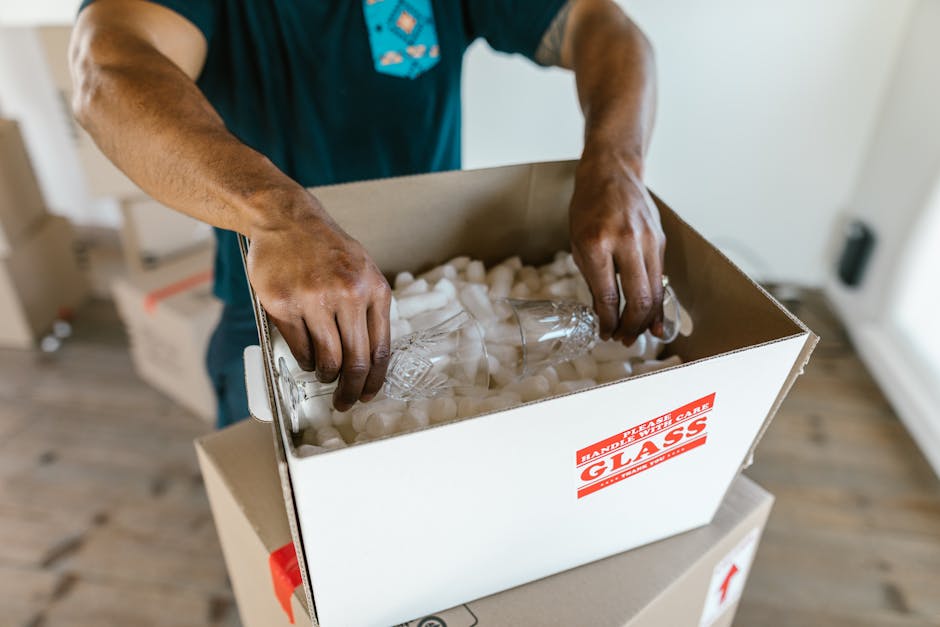
Wrap each piece on its own, even if several items are of the same type. Glasses, mugs, ornaments and small vases should not rub against one another. Use packing paper for the first layer and bubble wrap for extra protection where needed. For very delicate surfaces, paper first is often a kinder choice than putting bubble wrap straight onto the item.
4. Cushion the base of the box
Add a soft layer at the bottom before placing anything inside. Crumpled paper, folded paper pads or cushioning material all help reduce impact if the box is set down hard. This step is easy to skip because the box looks empty and harmless. That is exactly why people skip it.
5. Fill gaps properly
Items should sit snugly, not loosely. Gaps invite movement, and movement causes damage. Pack paper, tissue or cushioning between pieces so nothing knocks around inside the box. If the items are shaped awkwardly, you may need to alternate orientation to lock them in place. A bit like a puzzle, except the prize is not broken crockery.
6. Use vertical packing where appropriate
Plates and similar flat items are often safer when packed vertically rather than stacked flat. This reduces pressure on the bottom piece and spreads force more evenly. Wrap each item and separate them with cushioning so they stay upright and stable.
7. Protect the top and seal well
Once the box is full, add top cushioning and close it securely with tape. Reinforce the base and seams too. A box that opens during lifting is one of those tiny disasters that feels silly in the moment and annoying for the rest of the day.
8. Label clearly and consistently
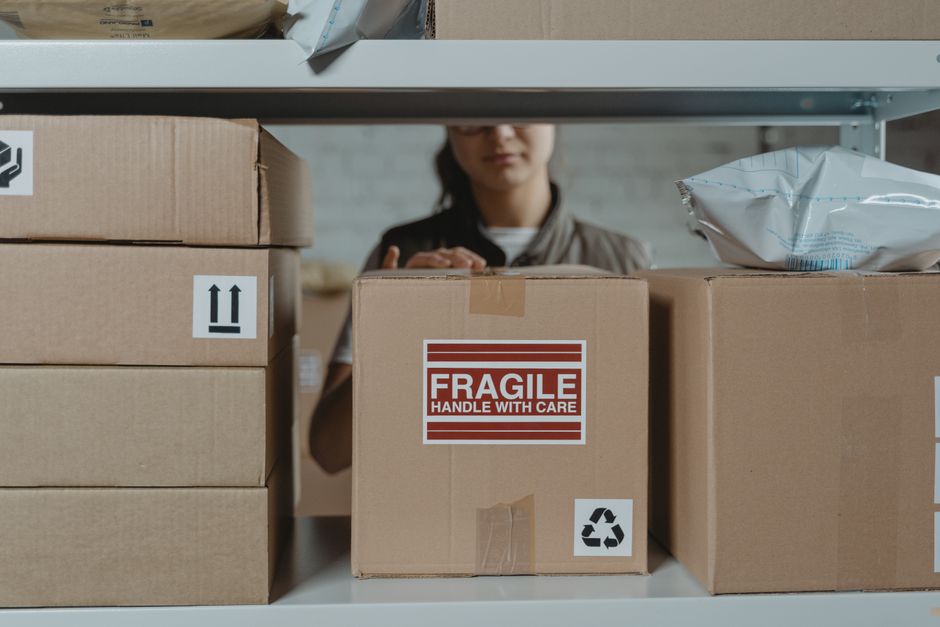
Write FRAGILE, the room it belongs to, and ideally a short note like "glassware" or "picture frames." Labels should go on more than one side so they are visible during loading. If you are working with a removal company or arranging house removals, this clarity helps the movers position the boxes correctly in the vehicle.
9. Keep high-risk items separate
Very fragile, valuable or sentimental items are often best moved separately if possible. That may include jewellery, important documents, antique pieces, or anything irreplaceable. Some things are just not worth mixing in with the general moving load.
Expert Tips for Better Results
Here is where small habits make a big difference. The practical stuff. The sort of thing experienced movers notice immediately.
- Use plenty of paper, not just one layer: One thin wrap is not enough for sharp edges or fragile corners.
- Pack by category: Keep glasses with glasses, plates with plates, and decorations with decorations.
- Do not overload with newspaper ink: It can mark some surfaces, so plain packing paper is cleaner.
- Reinforce weak items: Old boxes, worn tape or damp materials are asking for trouble.
- Place heaviest items at the bottom of the box: But only if they are properly cushioned and the box can take the weight.
- Leave no empty space at the top: If the lid bulges, it is usually a sign the box is trying to tell you something.
A useful professional habit is to pack as though the box may be turned on its side for a moment, because sometimes it will. That does not mean tossing boxes around. It means packing with enough structure that a brief tilt does not become a disaster.
If you are moving across town with a smaller load, a man with van style service may be enough. For larger or more complex moves, a dedicated movers service or a bigger removals van can make the handling smoother. The right vehicle matters more than people expect.
Common Mistakes to Avoid
Most breakages come from a handful of predictable mistakes. If you avoid these, you are already ahead.
- Using oversized boxes: Heavy, loose boxes are a bad combination.
- Wrapping too quickly: Speed is fine until it means thin protection and hidden gaps.
- Mixing fragile and non-fragile items: A heavy object can crush lighter pieces.
- Leaving items loose inside the box: Movement is the enemy.
- Forgetting to reinforce the bottom: Boxes fail from underneath more often than people think.
- Not labelling properly: If nobody knows what is fragile, nobody can handle it carefully.
- Overestimating the strength of "just one more item": That final mug is often the one that changes the whole box balance.
Another common one: people pack by room first and fragility second. That is neat in theory, but in practice it can lead to fragile items being scattered into boxes that are too mixed. Better to prioritise protection first, then organise by room where possible.
And yes, the occasional overconfidence helps no one. We have all seen the person who says, "It'll be fine," and then quietly asks for another roll of tape two minutes later.
Tools, Resources and Recommendations
You do not need a warehouse full of specialist kit to do this properly. A modest, well-chosen set of materials is usually enough.
| Item | Best use | Why it helps |
|---|---|---|
| Strong double-walled boxes | Glassware, ceramics, ornaments | Better resistance to compression and rough handling |
| Packing paper | General wrapping | Cushions surfaces without adding too much bulk |
| Bubble wrap | Very delicate items | Adds extra impact protection |
| Parcel tape | Sealing and reinforcement | Keeps boxes closed under movement and pressure |
| Markers and labels | Clear identification | Helps with room placement and careful handling |
| Box dividers | Glasses and bottles | Stops items touching each other |
| Blankets or soft wraps | Large delicate items | Useful for mirrors, framed art and lamps |
If you are packing a full house, you may find it useful to combine DIY packing with professional support from house movers or house removalists. That approach works especially well when there are only a few items that need extra attention. You keep control, but you are not carrying the whole burden alone.
On the service side, it can also help to understand the wider move setup, including removals pricing, vehicle size, and the practical differences between a simple pickup and a full move. For budget planning, the page on pricing and quotes is a sensible place to start.
Law, Compliance, Standards, or Best Practice
For most households, fragile packing is not a regulated activity in itself. Still, best practice matters, especially where safety, insurance and careful handling are concerned. In the UK, removal firms are generally expected to handle goods with reasonable care, and customers are usually expected to pack items suitably if they are doing it themselves. That split matters. If a box is poorly packed by the customer, no amount of careful driving will fully undo the risk.
It is also sensible to read the mover's terms and safety information before the day arrives. A company's terms and conditions, insurance and safety information, and health and safety policy can give you a better idea of responsibilities, exclusions and packing expectations. That is not just admin. It can help prevent confusion if something unexpected happens.
If you are hiring a vehicle separately, the same logic applies. A properly loaded removal van or removal truck hire setup should still be matched with careful internal packing. The vehicle is only one part of the protection chain.
Best practice, in plain English, is this: pack fragile goods so they can survive being lifted, carried, stacked carefully and transported without touching hard surfaces inside the box. That is the real standard.
Options, Methods, or Comparison Table
Not every fragile item needs the same level of treatment. Choosing the right method saves both time and materials.
| Method | Best for | Pros | Trade-offs |
|---|---|---|---|
| Single wrapping with paper | Mugs, sturdy glasses, decorative items | Quick, tidy, cost-effective | Less protection for very delicate surfaces |
| Paper plus bubble wrap | Glassware, ceramics, small ornaments | Strong all-round protection | Takes more time and materials |
| Divided box packing | Wine glasses, bottles, tall items | Reduces contact between items | Needs the right box inserts |
| Double boxing | Valuables, electronics, very fragile pieces | Excellent cushioning and impact resistance | More bulky and slower to pack |
| Blanket wrapping | Mirrors, framed art, lamps | Good for larger awkward shapes | Needs careful securing |
As a rule of thumb, use the lightest method that still gives proper protection. If you are wrapping three plates, you do not need to double box them. If you are packing a family heirloom vase, then yes, go the extra mile. No shame in that at all.
Case Study or Real-World Example
Picture a typical Saturday morning move in a mid-terrace house. The kitchen is mostly packed, the kettle is gone, and there is that one cupboard full of glass tumblers, mismatched mugs and a few delicate serving dishes that have been ignored until the last minute. This is where people usually rush.
In a better version of that same scene, the fragile cupboard gets emptied first. The items are sorted: everyday mugs in one group, glasses in another, and the nicer serving plates in a separate pile. Small boxes are lined with paper. Each glass is wrapped individually. Plates are packed vertically, not stacked flat. The final box is sealed, labelled on two sides, and placed where it can be loaded last and unloaded first.
The result is not glamorous. Nobody cheers. But at the new house, you open the box and everything is there. No chips. No tiny shards in the bottom. No one saying, "I thought that one was in bubble wrap." It just works. And on a moving day, that is genuinely satisfying.
This kind of controlled packing also matters for people using man and van removals or smaller-scale moving support, where every box needs to be easy to place and secure in transit. The fewer surprises inside the box, the smoother the whole day feels.
Practical Checklist
Use this before you tape the last box shut.
- Have I gathered enough strong boxes for fragile items?
- Do I have packing paper, bubble wrap, tape and markers ready?
- Have I packed the most delicate items separately?
- Is each item wrapped individually?
- Have I padded the bottom of every box?
- Are there any gaps where items could shift?
- Have I avoided mixing heavy and delicate pieces in the same box?
- Are the boxes a sensible size and weight?
- Have I reinforced the base and seams with tape?
- Is each box clearly marked fragility, contents and destination room?
- Have I kept valuables and essentials aside for personal transport?
- Do any mirrors, pictures or lamps need special wrapping or separate handling?
If you can tick those off, you are in good shape. Not perfect, because moving never feels perfectly tidy, but very much on the right track.
For anyone still deciding how much help to book, you may also want to look at removals near me to compare available support with your own packing plan. Sometimes a little extra help at the right moment is all you need.
Conclusion
Packing fragile items for removals like a professional is really about discipline, not drama. Separate items carefully, wrap them properly, build stable boxes, and label everything clearly. That is the heart of it. Once you stop treating fragile packing as a last-minute task, the whole move becomes calmer and much less risky.
If there is one thing to remember, it is this: fragile items need room to be protected, but not room to move. That small difference can save a lot of money, time and disappointment.
Take your time, trust the process, and do the fiddly bit properly. Future-you, standing in the new kitchen with an intact set of glasses, will be quietly grateful.
Get a free quote today and see how much you can save.
Frequently Asked Questions
What is the best way to pack fragile items for removals?
The best way is to wrap each item individually, use a strong box, add cushioning at the base and top, fill all gaps, and label the box clearly. The key is preventing movement inside the box.
Should I use bubble wrap or packing paper for fragile items?
Packing paper is great for the first wrap and for filling gaps, while bubble wrap adds extra protection for very delicate or valuable pieces. In many cases, a combination of both works best.
Are small boxes better for fragile items?
Usually, yes. Smaller boxes are easier to lift and less likely to be overpacked. They also help keep fragile items snug, which reduces shifting during transit.
How do I pack plates so they do not break?
Wrap each plate individually and pack them vertically rather than flat if possible. Add cushioning between each item and make sure the box is full enough that the plates cannot slide around.
How should I pack glasses for moving?
Wrap each glass separately, pad the inside of the box, and use dividers if you have them. Fill the spaces around the glasses so they do not touch or rattle.
Can I put fragile items in a large box?
You can, but it is usually not the best idea unless the items are very lightweight and the box is well supported. Large boxes are harder to handle and more likely to be overloaded.
What should I do with valuable or sentimental fragile items?
Keep them separate and transport them yourself if possible. If that is not practical, pack them with extra care and make sure they are clearly identified before moving day.
Do removal companies pack fragile items for me?
Some do, especially if you book packing support alongside the move. It is worth checking the service level before booking, because not every move includes full packing by default.
How far in advance should I pack fragile items?
Start with non-essential fragile items a couple of weeks before the move if you can, then leave everyday kitchen pieces until closer to the day. That spreads the workload and reduces last-minute stress.
What is double boxing and when should I use it?
Double boxing means placing a packed box inside a larger box with cushioning in between. It is useful for very fragile, valuable or difficult-to-replace items where extra impact protection is worth the extra effort.
How do I label fragile boxes properly?
Mark them with FRAGILE, the room destination and a short note on the contents. Put the label on more than one side so it stays visible while the boxes are being moved.
Is it worth paying for professional packing?
If you have a lot of breakables, valuable pieces or simply not enough time, yes, it can be worth it. Professional packing is often less about luxury and more about reducing stress and breakage risk. That said, many people handle the easier items themselves and just get help with the delicate ones.
What is the biggest mistake people make with fragile packing?
The biggest mistake is leaving too much empty space in the box. Items move, knock together, and damage follows. A snug, well-cushioned box is always safer than a loose one.
Can I use towels or clothes instead of packing materials?
Sometimes, yes, but only for lighter protection and not as a substitute for proper packing around very fragile items. Towels can help with cushioning, but they should not be your only defence for glass or delicate ceramics.
If you are planning a bigger move, it can help to compare options across removal services and house removals before you commit. A little planning now saves a lot of muttering later.